What it is
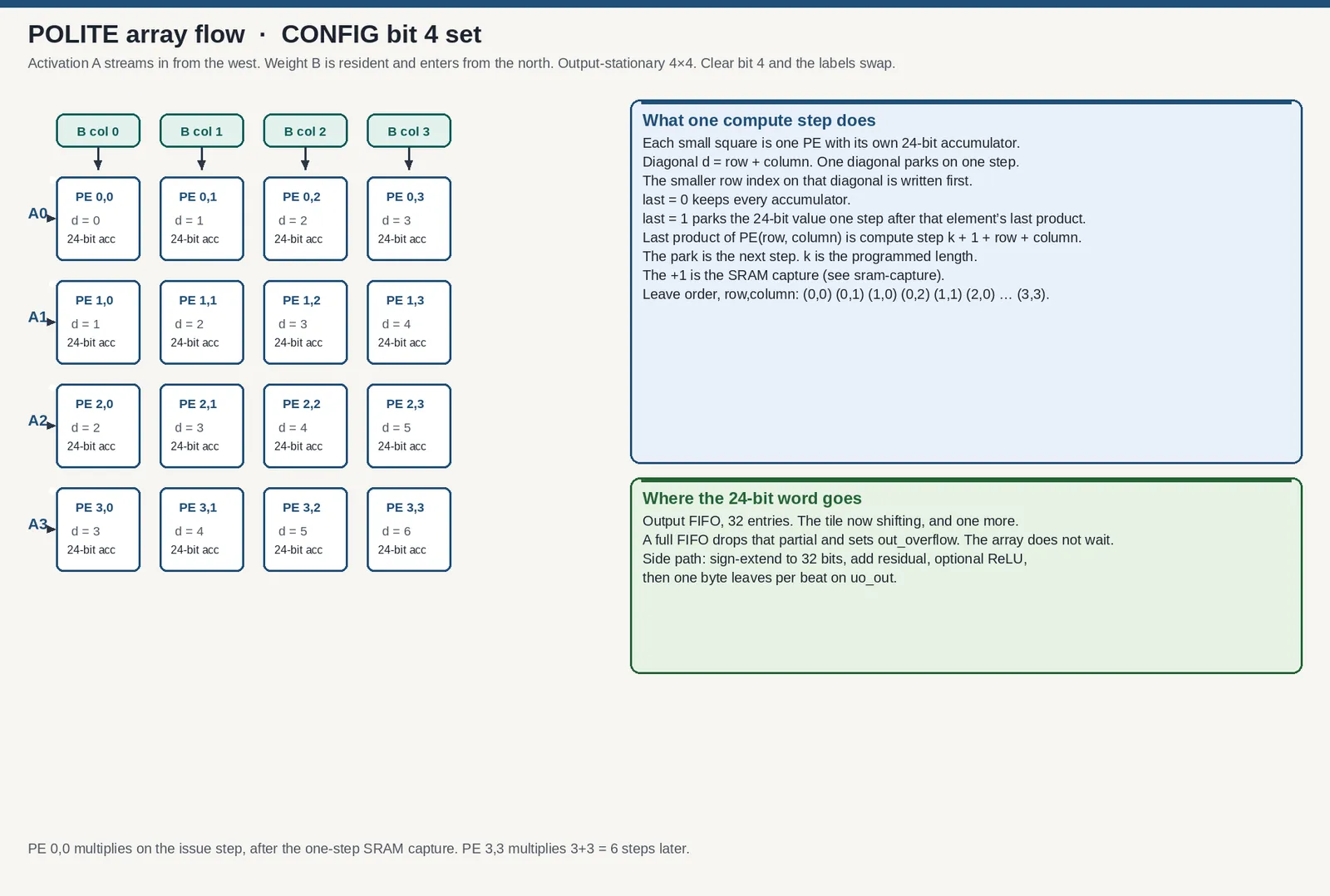
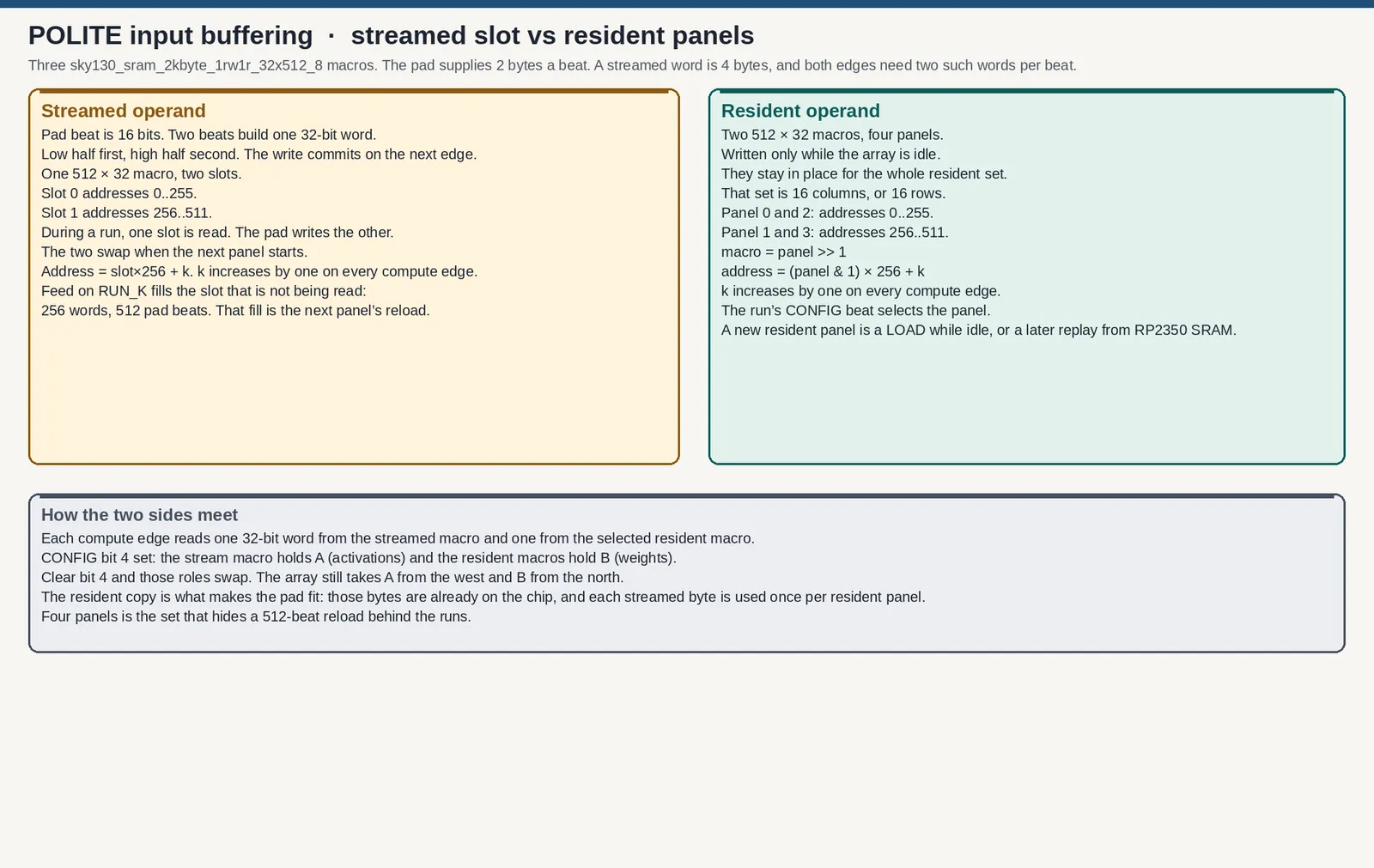
POLITE is a 4×4 int8 matrix unit designed for Tiny Tapeout. One operand panel stays on chip; the other streams in over a 16-bit pad bus, 2 bytes per beat. The array is 16 PEs, and each PE does 2 MACs per clock (32 MACs per clock in total), keeping a 24-bit partial sum. A finished tile leaves as sixteen 32-bit words through a decimate-by-2 output: a rising-edge output register presents a new result byte on uo_out at most once every 2 clocks and holds it for the board's capture 2 cycles later (OUT_MCP=2).
I wrote this for Rev Silicon’s first-chip effort. The architecture (widths, resident panels, single-edge pad protocol) is intended to be open. Full RTL is not mirrored on this site.
My role
Sole designer of the POLITE core: golden model in C (polite/src/chip.c), Verilog RTL under rtl/, cosimulation testbenches, and architecture docs/diagrams.
Tech
- Verilog (Tiny Tapeout top
tt_um_polite.v) - C11 golden model + Makefile cosim (iverilog / vvp)
- sky130 2 kB SRAM macros for the operand store
Key points
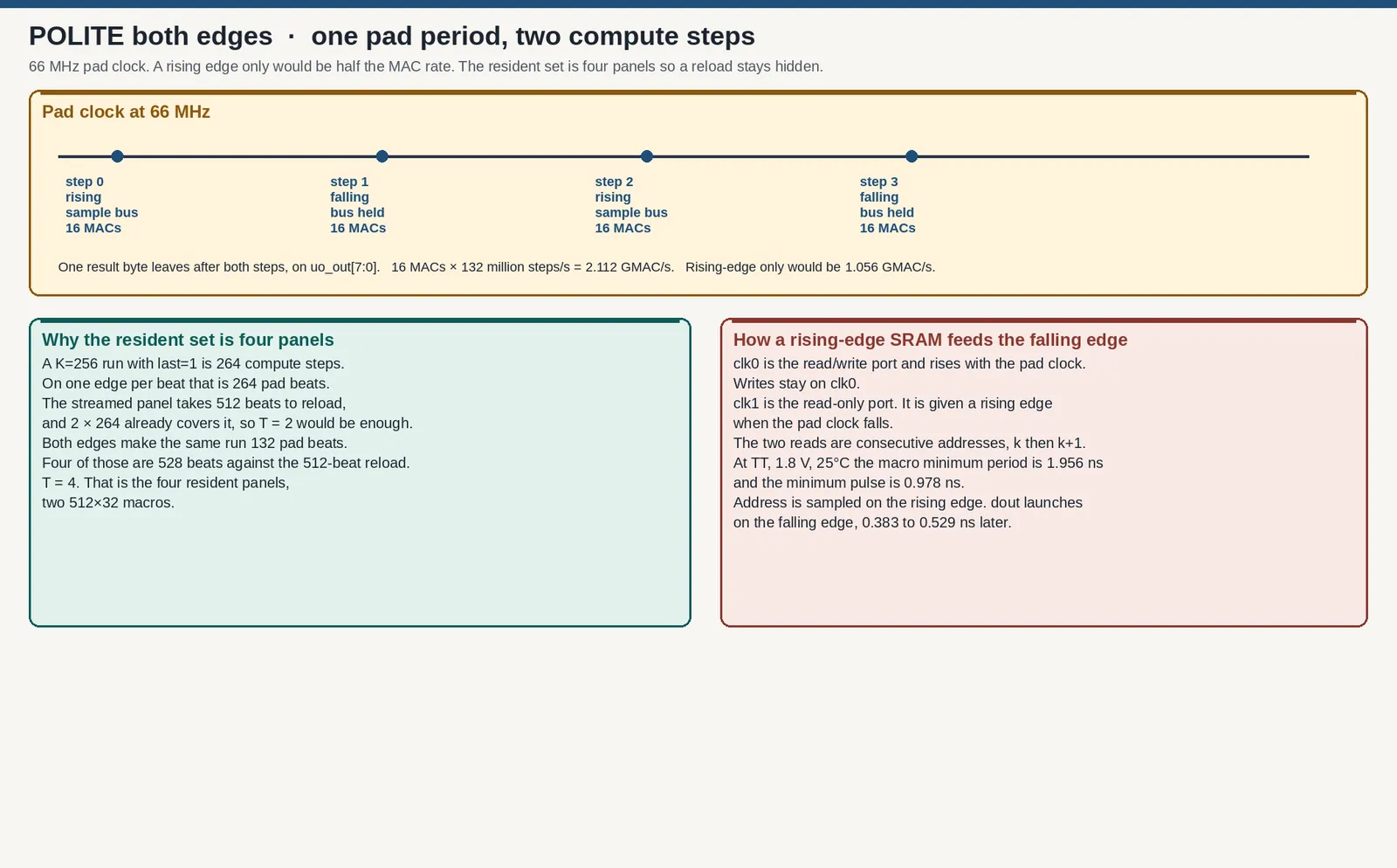
- Single-edge clocking: one pad beat is one
clkperiod and every flop is a rising-edge flop. The earlier design ran a rise tick and a fall tick per beat; now both ticks are computed in one clock, still cycle-exact with the C model. - 16 PEs × 2 MACs = 32 MACs per clock, carry-save accumulation.
- Output is decimated by 2 on the rising edge (
OUT_MCP=2): one result byte per 2 clocks. Tiny Tapeout rates pad inputs at 66 MHz but outputs at 33 MHz, so a new byte every 2 clocks at a 66 MHz clock is the 33 MHz equivalent. - Reset is released through a two-flop rising-edge synchronizer and then fanned out as registered broadcast copies (24 reset copies), so no single reset net drives the whole design.
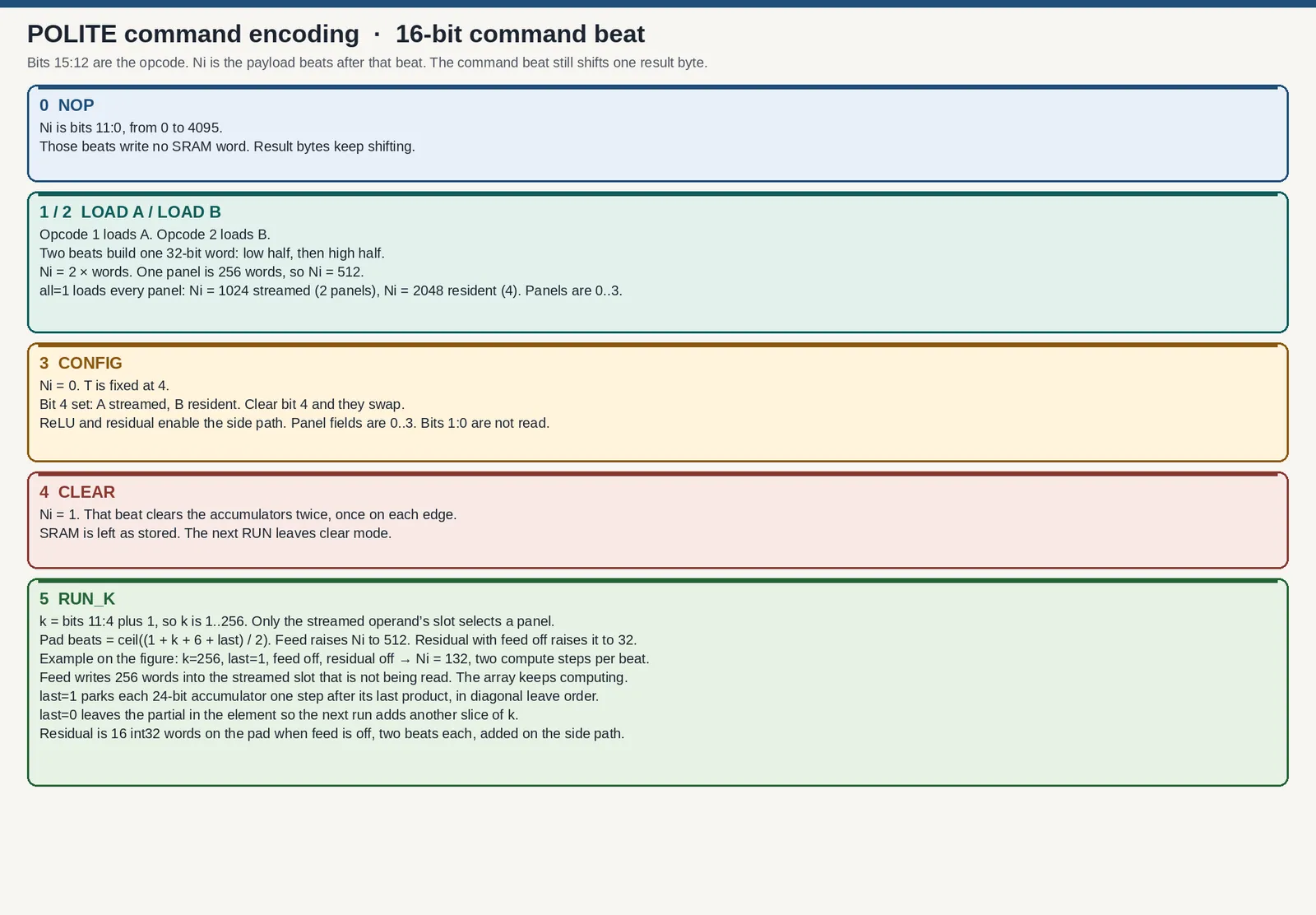
- Docs walk the block diagram, command encoding, and where RTL differs from the earlier sketches.
Dates
September 2026 (active). Git history on the org remote starts 2026-09-21.
Links
Architecture will be public with the Tiny Tapeout / Rev Silicon release. The org repo is currently private — no public GitHub link here yet.
Figures
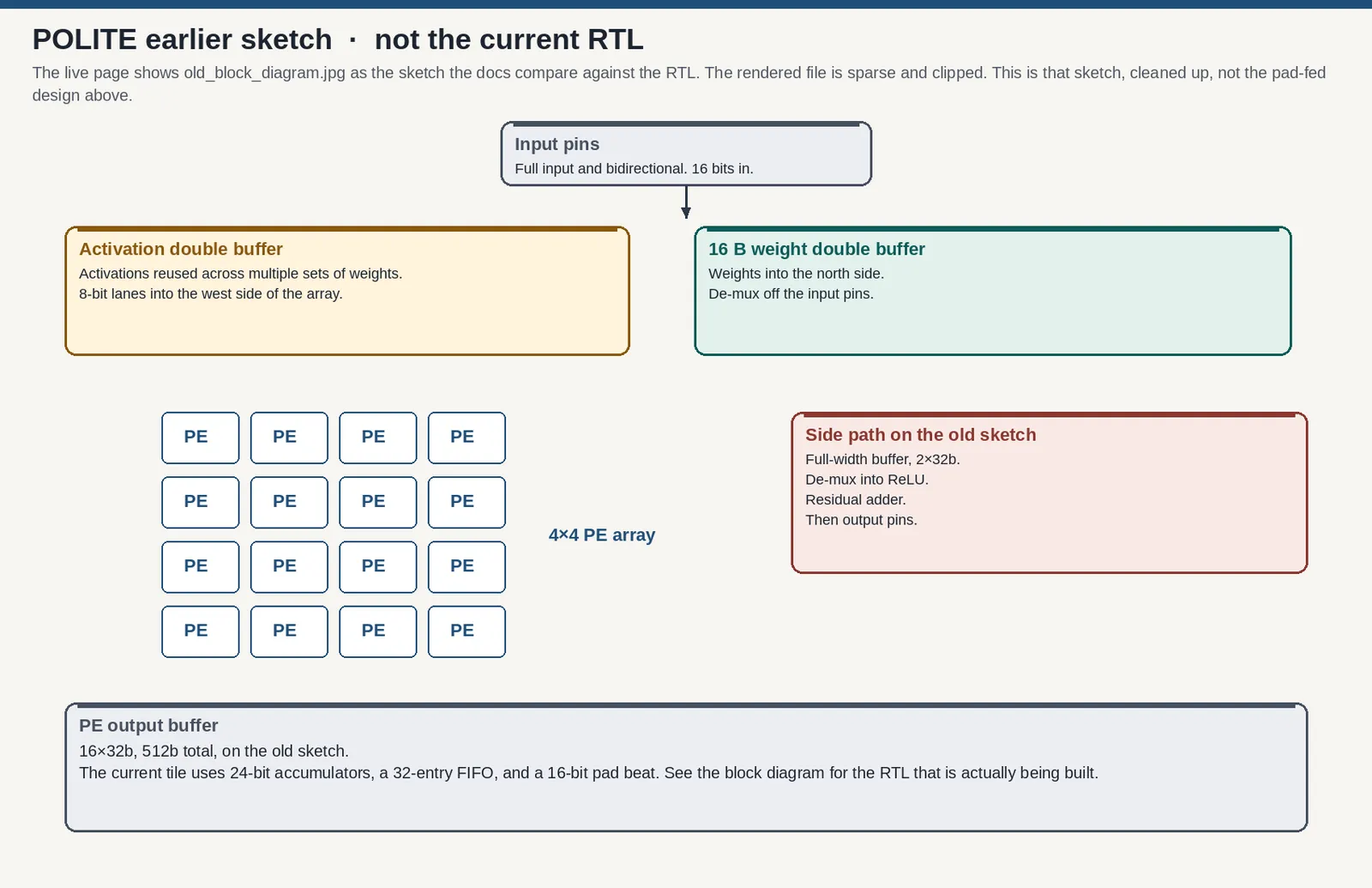
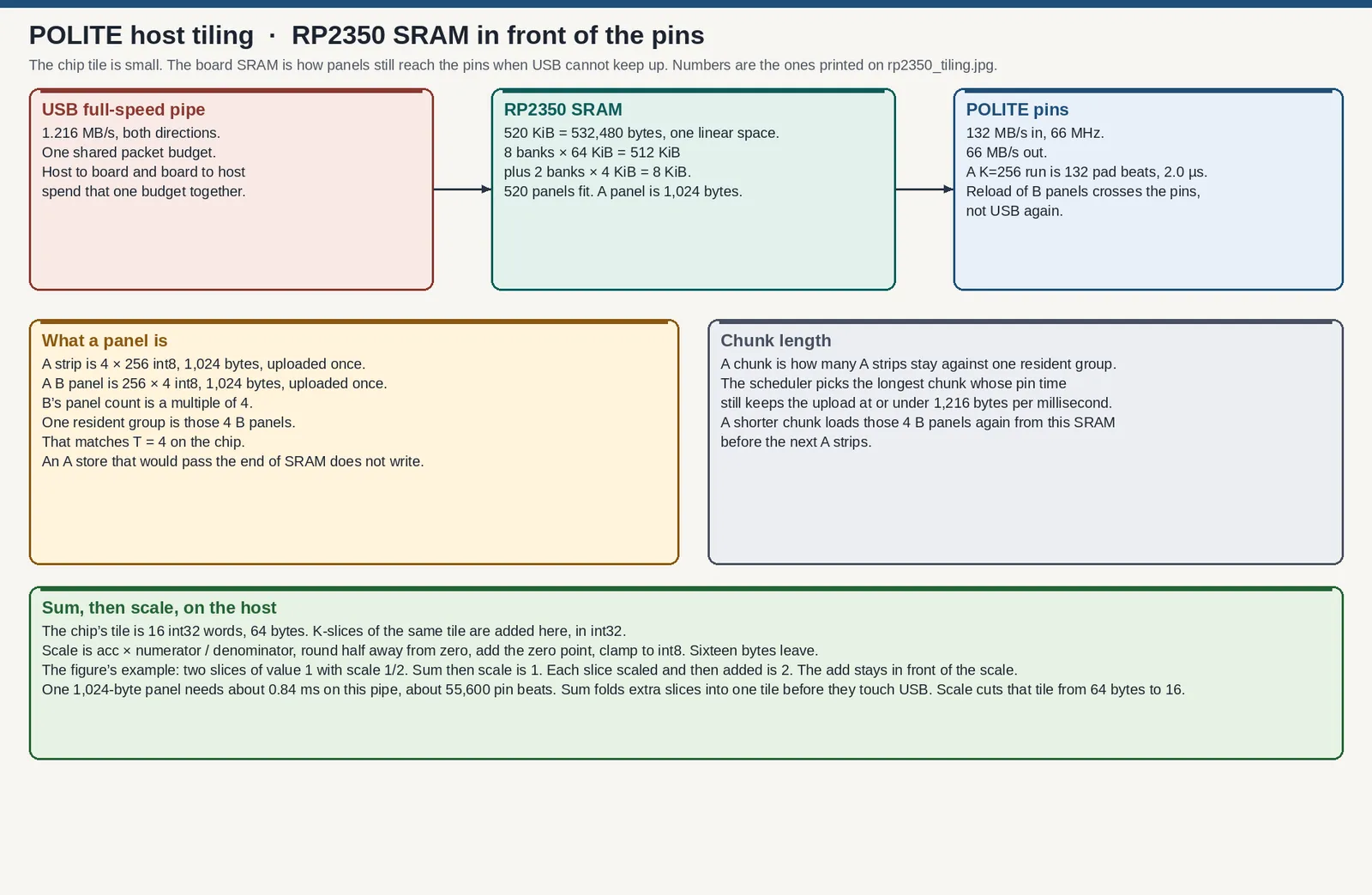
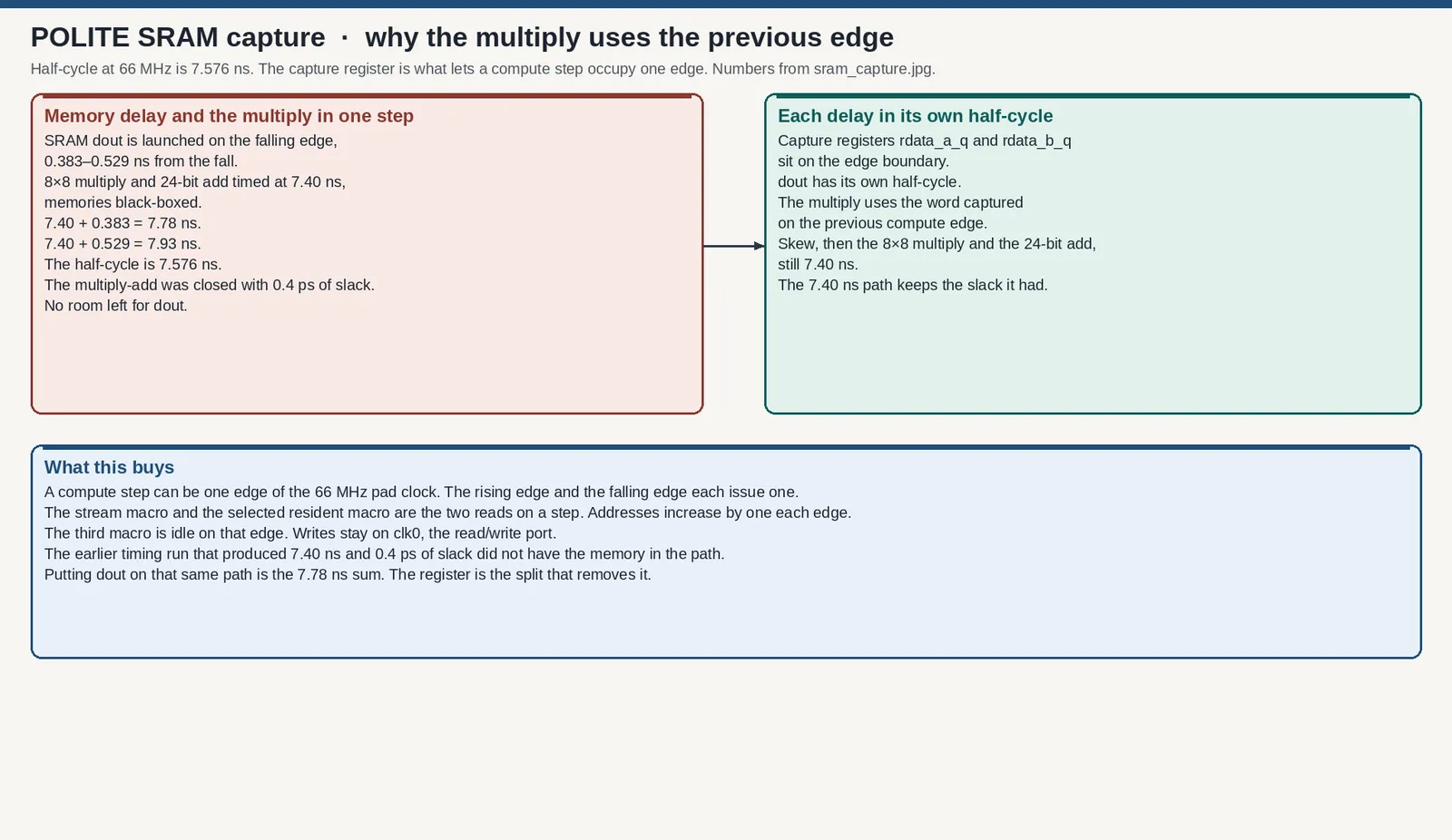
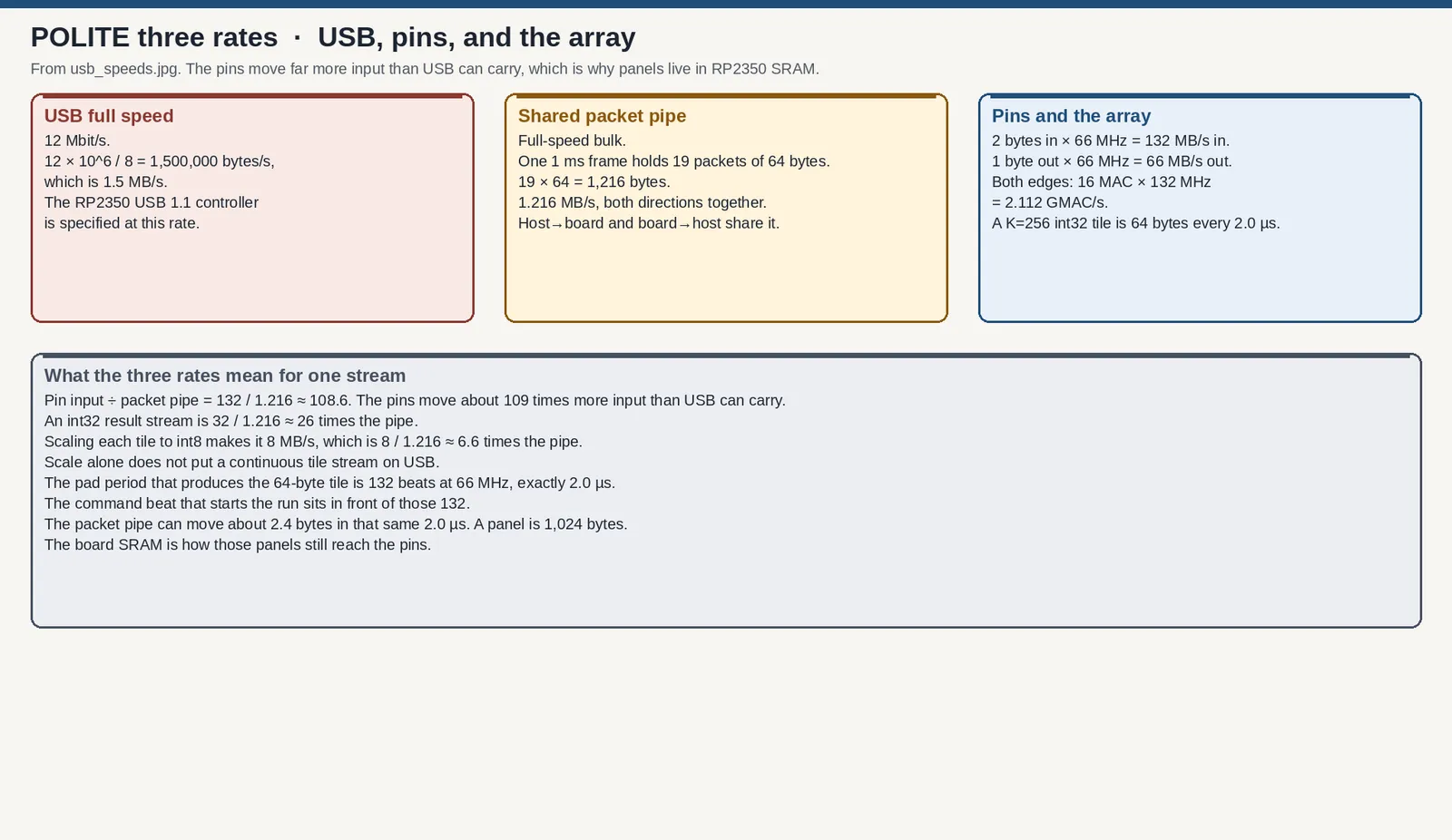
chip.pngpolite-array-flow.pngpolite-both-edges.png— historical: the earlier dual-edge protocol, replaced by single-edge clockingpolite-commands.pngpolite-input-buffering.pngpolite-old-block-diagram.png— earlier sketch, not the current RTLpolite-rp2350-tiling.pngpolite-sram-capture.pngpolite-usb-speeds.png